
 October
21
October
21
Tags
HEALTH – Things Doctors Don’t Tell You About Having A Breast Cancer Mastectomy
I found a lump in my breast that I honestly thought was just gristle. When I was told it was cancer, I was completely shocked.
Thankfully, I had private health insurance, something I now fully recommend arranging before you ever need it. It meant no waiting lists, access to the best care, and incredible doctors who supported me every step of the way.
I was one of the lucky ones. My diagnosis revealed two different types of breast cancer: Stage 1 invasive and Stage 0 (DCIS). I had a mastectomy on one side and a reconstruction on the other. I’ve been blessed to be told that the cancer is gone, and I won’t need radiotherapy or chemotherapy. But it isn’t the end. I’m still healing, and I even needed a small second surgery because my scar wasn’t healing properly. There are still many appointments ahead.
Before my surgery, I did a lot of research about what to expect, but there were still so many things I wasn’t told. So I’ve written this in the hope that it helps someone else going through this journey feel a little more prepared, and a little less alone.
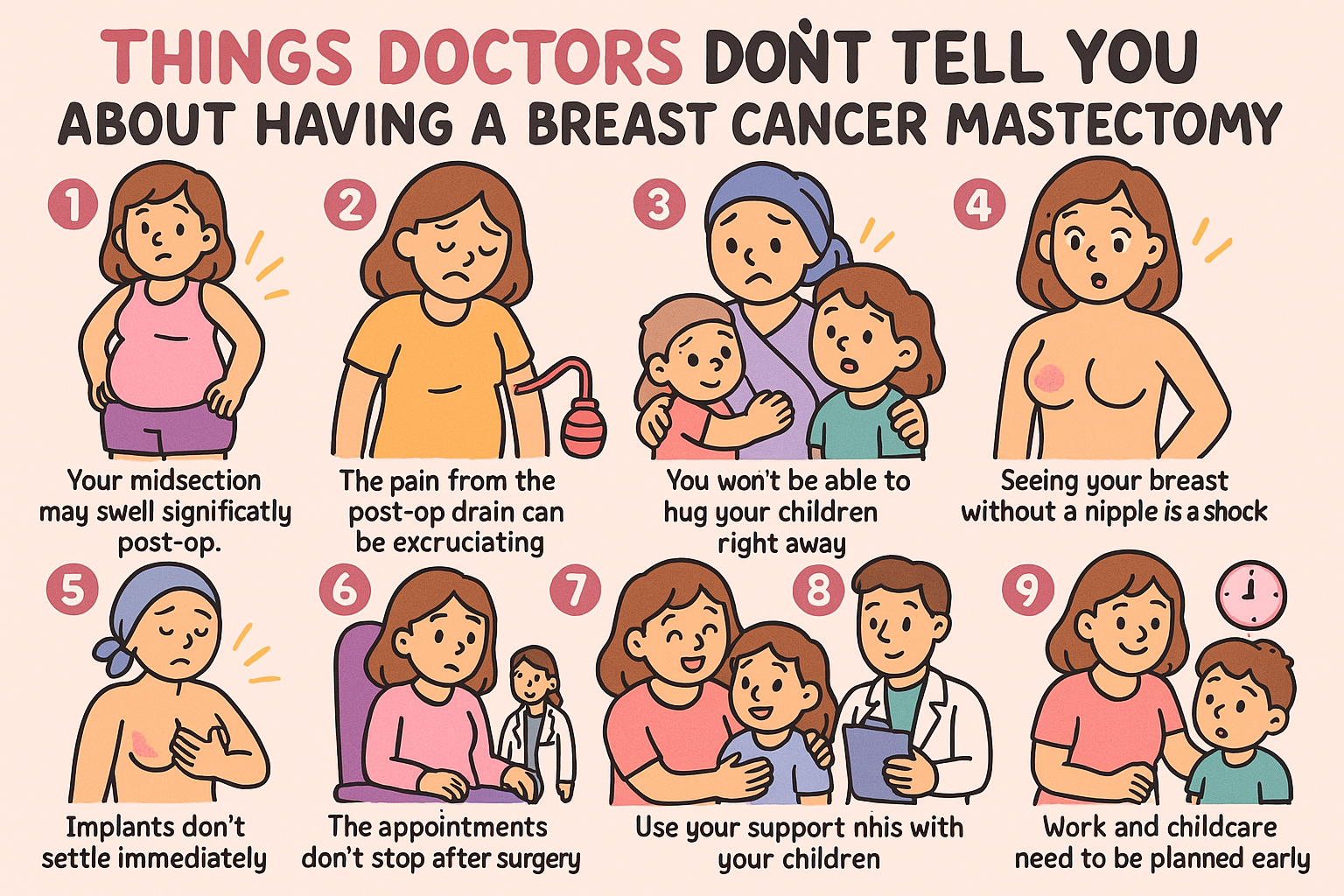
1. Your midsection may swell significantly post-op
This isn’t often talked about, but abdominal swelling can be quite dramatic after surgery. It can be surprising and uncomfortable, and isn’t always mentioned beforehand.
2. The pain from the post-op drain can be excruciating
Many expect the surgery to be the worst part, but for some, the drains (which stay in for days or weeks) are far more painful. The tugging sensation and irritation can be intense.
3. You won’t be able to hug your children right away
If you have younger children, this can be emotionally difficult. Physical closeness may not be possible for a while, which is heartbreaking when you need comfort and connection.
4. Seeing your breast without a nipple is a shock
Even if you’re mentally prepared, nothing fully prepares you for the emotional impact of seeing your body changed in such a significant way. It takes time to adjust.
5. Implants don’t settle immediately
If you have immediate reconstruction, know that the implant can sit unnaturally high on your chest for weeks or even months. It’s a process before things look and feel more natural.
6. The appointments don’t stop after surgery
You’ll be seeing your breast surgeon, oncologist, and plastic surgeon regularly, often for months. The medical side of recovery is long and ongoing.
7. It takes months to heal, physically and emotionally
Mastectomy isn’t just a surgical event; it’s a journey. Adjusting to your new body, managing fatigue, and working through emotions takes time. Be patient with yourself.
8. Use your support network
This is a tough thing to go through, physically, emotionally, and mentally. Don’t try to do it all on your own. Lean on your friends, family, or support groups. Whether it’s someone to help with practical things or just to sit with you when you’re feeling low, support makes a huge difference.
9. It’s difficult to share this with your children
Talking to children about a cancer diagnosis is one of the hardest parts. Every child is different, so do your research, and be as honest as you can while still protecting them emotionally. Let them ask questions, keep it age-appropriate, and remind them often that they are safe and loved.
10. Work and childcare need to be planned early
I’m blessed to have a job I could still do during this time, it kept me happy and helped keep my mind busy. But it’s important to be open with your employer as soon as you know. Most will want to support you, and early conversations help set realistic expectations. Also, pre-plan childcare for appointments, recovery days, and hospital stays. Having that part covered gives you one less thing to do.
Every journey with breast cancer is different, but you are not alone. The more we share, the more we can support each other through it.
Cat, Heart London Magazine


 Heart London Magazine