
 October
30
October
30
Tags
HEALTH – Breast Cancer Signs to Look Out For: What Everyone Should Know
I am so blessed that I caught my cancer early at stage 1 and 0, so I wanted to share this with our women so hopefully you too can catch your cancer early. I found a lump.
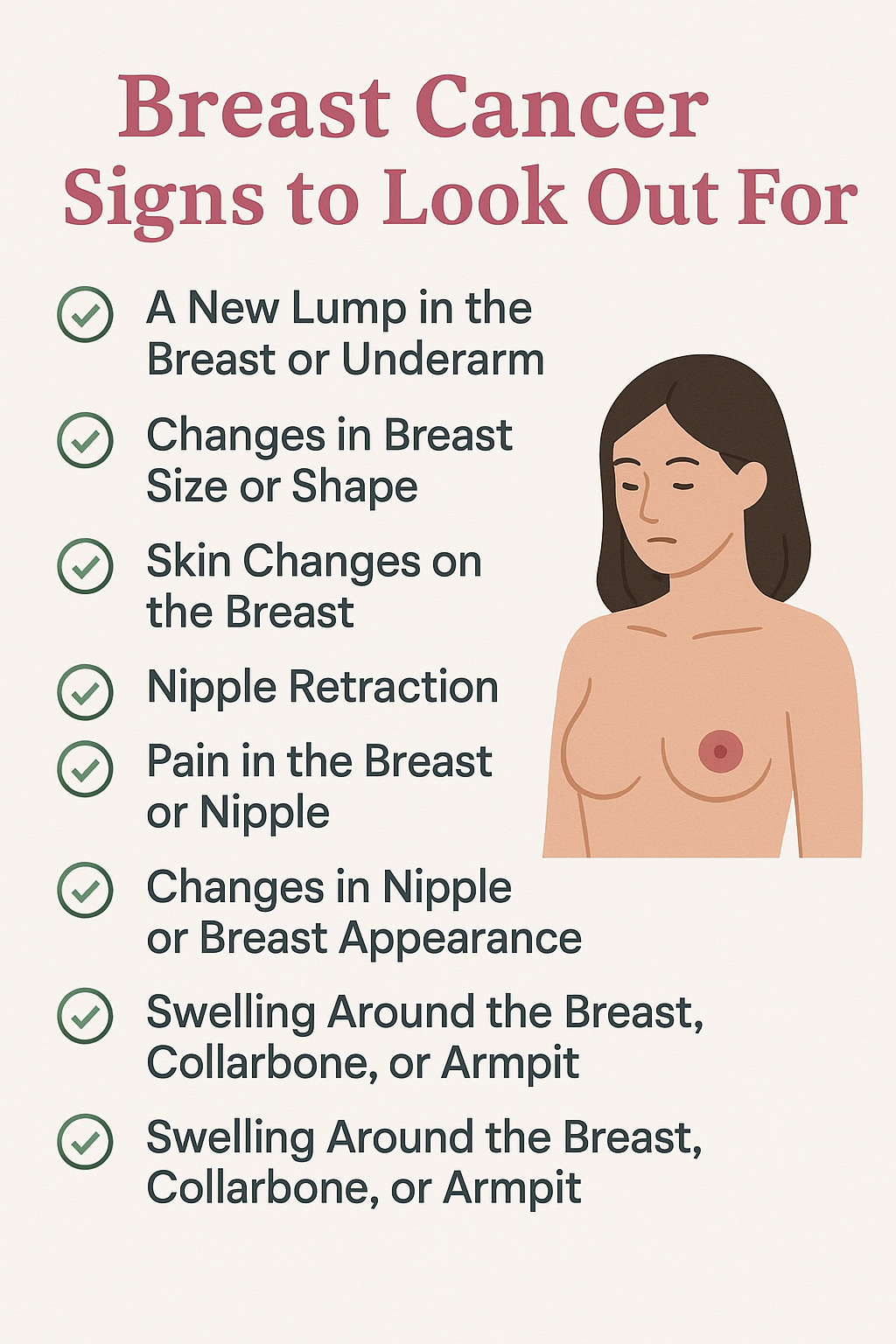
Breast cancer is one of the most common cancers affecting women worldwide, though it can occur in people of all genders. Detecting it early can significantly increase treatment success and survival rates. That’s why understanding the signs your body may be sending is crucial. While many breast changes are not cancerous, it’s important to pay attention and speak to a healthcare provider if something feels unusual.
Below are some of the most common breast cancer warning signs to be aware of.
✅ 1. A New Lump in the Breast or Underarm
A painless, hard lump with irregular edges is a classic warning sign, but lumps can vary in size and texture. Many lumps are benign (not cancer), but it’s wise to get any new lump checked.
✅ 2. Changes in Breast Size or Shape
Sudden swelling or noticeable changes in contour could signal something worth examining, especially on just one side.
✅ 3. Skin Changes on the Breast
Pay attention to:
- Dimpling or puckering (often compared to an orange peel)
- Thickened skin
- Redness or scaling
These may indicate underlying tissue changes associated with inflammatory breast cancer.
✅ 4. Nipple Discharge (Other Than Breast Milk)
Clear, bloody, or persistent discharge when you’re not breastfeeding should prompt a medical evaluation.
✅ 5. Nipple Retraction
If a nipple suddenly pulls inward or changes position, especially if that’s new for you, it could be a sign of abnormal tissue growth beneath the surface.
✅ 6. Pain in the Breast or Nipple
While breast pain alone isn’t usually a sign of cancer, persistent or localized pain—especially if accompanied by other changes—should be checked out.
✅ 7. Changes in Nipple or Breast Appearance
Look for:
- Crusting
- Scaling
- Rash around the nipple
These symptoms may relate to rare conditions such as Paget’s disease of the breast.
✅ 8. Swelling Around the Breast, Collarbone, or Armpit
Even without a felt lump, swelling can indicate lymph node involvement—the immune system’s early warning network.
Who Should Be Especially Watchful?
Certain factors increase breast cancer risk:
- Family history of breast or ovarian cancer
- Genetic mutations (BRCA1/BRCA2)
- Older age
- Previous chest radiation
- Dense breast tissue
- Long-term hormone therapy
However, breast cancer can occur without obvious risk factors, so everyone should pay attention.
How to Monitor Your Breast Health
👀 Perform regular self-exams
Become familiar with your normal breast texture and appearance.
🩺 Schedule recommended screenings
Mammograms are crucial for detecting cancers too small to feel.
✍️ Track symptoms
Noting changes over time can help your doctor make informed decisions.
When to See a Doctor
If you notice any of the above changes—especially if they persist longer than 2 weeks—schedule an appointment. It’s always better to check early than to wait.
Final Thoughts
Breast cancer awareness isn’t about living in fear—it’s about empowerment through knowledge. Paying attention to subtle changes can save lives. Listen to your body, advocate for your health, and encourage those around you to do the same.


 Heart London Magazine